Wisconsin voters just handed a narrowly divided state Supreme Court another decade of liberal control—after the most expensive judicial race in American history turned a “nonpartisan” election into a national proxy war.
Story Snapshot
- Susan Crawford defeated Brad Schimel on April 1, 2025, keeping Wisconsin’s Supreme Court at a 4–3 liberal majority for a 10-year term.
- National political figures and mega-donors flooded the race with outside spending, underscoring how state courts now shape headline issues once settled in Congress.
- The court’s direction could influence abortion policy, labor disputes, and redistricting fights in a swing state that often decides close national elections.
- High early turnout—about 600,000 votes cast before polls opened—signaled that voters increasingly see judicial elections as political power contests.
Crawford’s Win Locks In a 4–3 Liberal Court Through 2035
Wisconsin’s April 1, 2025 Supreme Court election ended with Dane County Circuit Judge Susan Crawford, a Democratic-backed candidate, defeating Waukesha County Circuit Judge Brad Schimel, who was backed by conservatives. The result preserved the court’s 4–3 liberal majority rather than expanding it, but the practical effect is still significant: the ideological balance stays intact for a full decade. Reported projections put Crawford ahead by about 55% to 45% once major outlets called the race.
Crawford’s victory speech leaned on her resume as a prosecutor, lawyer, and judge, arguing that her experience positioned her to “protect” rights and Wisconsin families. Schimel, by contrast, ran as the conservative alternative in a contest widely treated as a referendum on the state’s legal direction after the U.S. Supreme Court pushed major social policy questions back to the states. With no recounts or legal challenges highlighted in the available reporting, the outcome appears settled.
Outside Money Turned a Judicial Seat Into a National Political Battlefield
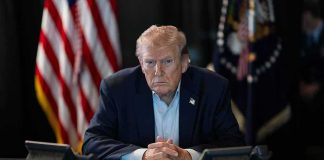
Wisconsin Supreme Court races are formally nonpartisan, but recent cycles have been anything but. This contest was described as the most expensive judicial election in U.S. history, with a level of national attention usually reserved for Senate or gubernatorial races. President Donald Trump and Elon Musk aligned with Schimel, while prominent Democratic figures and donors—including Barack Obama and George Soros—aligned with Crawford, reflecting a broader trend of “nationalizing” state institutions.
The surge in spending and celebrity involvement speaks to a deeper reality that frustrates many voters across the spectrum: Americans increasingly view core governance as routed through courts rather than legislatures. For conservatives, that trend often looks like policy being set by judges insulated from voter accountability; for liberals, it’s frequently framed as a necessary backstop against Republican legislative power. Either way, the Wisconsin result shows how trust in normal lawmaking channels has eroded into a high-dollar fight over who controls the referee.
Abortion, Redistricting, and Labor Disputes Are Now Central Court Questions
The Wisconsin Supreme Court is positioned to shape some of the state’s most divisive issues. After the post-2022 shift that returned abortion policy to states, Wisconsin’s court became a focal point for litigation tied to old statutes and modern enforcement choices. A continued liberal majority is also expected to matter in redistricting disputes, after earlier court activity related to Republican-drawn maps. In a swing state, even small changes in maps can echo into national politics.
Labor and regulatory questions are also part of the stakes, with business groups and unions watching court composition closely. Conservatives typically prioritize predictable rulemaking, property rights, and limits on government compulsion; liberals often argue for broader workplace protections and union leverage. Because the court will be ruling in a climate where legislative compromise is rare, each decision risks being treated as a political win-or-lose event rather than a narrow legal holding, intensifying distrust in institutions.
What the High Turnout Signals About 2026 and the “System” Debate
Roughly 600,000 Wisconsin voters cast ballots before polls even opened, a sign that judicial elections are no longer background events. That engagement can be read two ways: voters are paying closer attention, but they’re also reacting to a system where big decisions feel trapped in courtrooms. Many Americans—right and left—already believe entrenched elites and career political networks protect themselves first. The scale of outside influence in this race will likely reinforce that suspicion.
For conservatives who want limited government and clearer democratic accountability, the Wisconsin outcome is a reminder that state courts can effectively steer policy for years with one election night. For liberals who fear Republican control of legislatures, it’s proof that winning courts can blunt America First governance at the state level. The broader takeaway is less partisan: when “nonpartisan” judicial seats become national, billionaire-funded campaigns, the public’s confidence in fair, restrained justice becomes harder to maintain.
Sources:
Wisconsin Supreme Court result: Susan Crawford wins
Crawford wins the 2025 Wisconsin Supreme Court election