
A groundbreaking FBI-IRS partnership targets nonprofits suspected of bankrolling domestic terrorism, marking the first time federal agents will trace tax-exempt dollars directly to violent extremist groups threatening American communities.
Story Overview
- FBI establishes command center with embedded IRS agents to investigate nonprofits funding domestic terrorism and political violence
- Initiative follows Attorney General Pam Bondi’s December 2025 directive prioritizing antifa and extremist groups after President Trump’s executive order
- IRS Criminal Investigation brings financial forensics expertise to track tax fraud and terror funding schemes
- Nine antifa members convicted in Texas for ICE facility attacks demonstrate escalating violence requiring enhanced federal response
Federal Agencies Unite Against Terror Funding Networks
The FBI launched a mission control command center in March 2026 to coordinate investigations into nonprofits potentially shielding domestic terrorists through tax-exempt status. IRS Criminal Investigation assigned agents to one-year FBI details, integrating financial crime expertise into counterterrorism operations. This unprecedented collaboration allows investigators to follow money trails from charitable donations to violent actors exploiting America’s nonprofit system. The IRS-CI confirmed its role, stating agents will use specialized knowledge of tax fraud and financial crimes to detect terrorism funding.
Presidential Action Drives Crackdown on Extremist Organizations
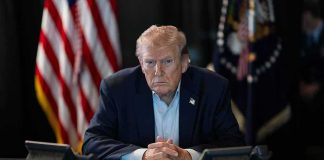
President Trump issued an executive order in September 2025 addressing domestic terrorism following multiple violent incidents, including the assassination of conservative influencer Charlie Kirk. Attorney General Pam Bondi escalated enforcement with a December 4, 2025 memo directing federal agencies to investigate and prosecute antifa and extremist groups. The directive mandated five-year file reviews to build intelligence on potential domestic terrorism actors and instructed prosecutors to consider tax crimes as investigative predicates. Deputy Attorney General task forces now coordinate with U.S. attorney offices assigning dedicated domestic terrorism coordinators nationwide.
Texas Convictions Highlight Growing Threat to Federal Facilities
Nine antifa members received convictions in March 2026 for attacking an Immigration and Customs Enforcement facility in Texas using weapons and explosives. The rare prosecutions demonstrate the violent tactics employed by decentralized extremist networks that have historically evaded federal charges. Domestic terrorism remains undefined as a standalone federal crime under current law, complicating prosecutions despite legal definitions in 18 U.S.C. § 2331 covering acts intended to intimidate civilians or coerce government policy. The FBI faces operational challenges tracking antifa’s fragmented structure, a concern Director Kash Patel acknowledged during December 2025 congressional hearings.
Congressional Oversight Intensifies Nonprofit Scrutiny
House committees launched parallel investigations into tax-exempt organizations suspected of political misuse before the FBI-IRS partnership announcement. The Oversight Committee opened a November 2025 probe into the Sixteen Thirty Fund for alleged campaign finance violations, while Ways and Means requested IRS revocation of CAIR-California’s status in January 2026 over political protests. These actions created momentum for broader enforcement against nonprofits potentially funding violence under charitable cover. Former DOJ domestic terrorism counsel Tom Brzozowski expressed concern about the approach, questioning whether the FBI established proper predication before compiling lists of targeted groups.
The initiative protects Americans’ constitutional rights to free speech, religious practice, and electoral participation by removing violent threats masquerading as legitimate advocacy. However, the lack of named targets and unspecified investigative predicates raises questions about potential overreach. The collaboration sets precedent for applying financial counter-terrorism tools domestically, traditionally reserved for foreign threat networks. Nonprofits across the political spectrum now face heightened compliance scrutiny as federal authorities redefine tax-exempt boundaries in an era of politically motivated violence. The Department of Justice committed to prosecuting terrorism consistent with congressional definitions while preserving rule of law protections, though critics fear the apparatus could be weaponized against legitimate dissent absent clear safeguards and transparent targeting criteria.
Sources:
FBI and IRS to investigate nonprofits for domestic terrorism links – CBS News
Government Scrutiny of Nonprofits Intensifies – Akin Gump
DOJ Issues Sweeping New Domestic Terrorism Directive – Arnold & Porter