
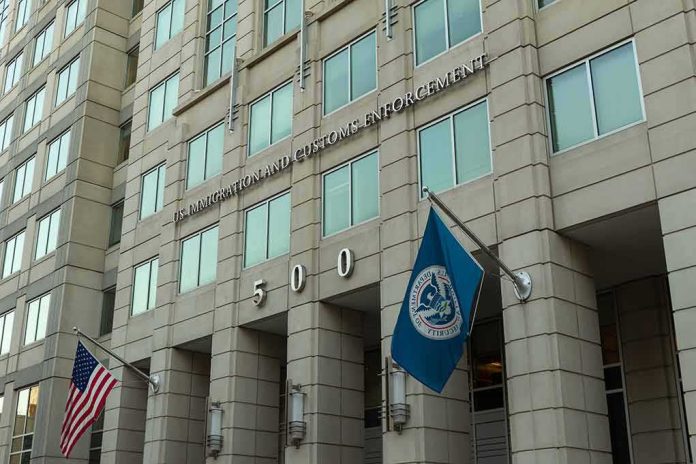
Liberal prosecutors in sanctuary cities now threaten to prosecute ICE agents enforcing President Trump’s border security, undermining federal authority and endangering law enforcement vital to American sovereignty.
Story Snapshot
- States like Illinois and Minnesota announce policies to criminally charge ICE agents for alleged misconduct during deportations, defying DHS immunity claims.
- Supreme Court precedent from 1906 allows states to prosecute federal officers when force use is disputed, challenging Trump’s expanded ICE operations.
- Recent ICE surge in Minneapolis led to two civilian deaths, prompting local investigations amid a pattern of 24+ agent crimes since 2020.
- Cook County State’s Attorney Eileen O’Neill Burke and Hennepin County’s Mary Moriarty lead efforts, risking federal-state clashes and operational paralysis.
Recent ICE Operations Spark Local Backlash
In January 2026, federal ICE agents surged into Minneapolis, resulting in the deaths of two civilians during enforcement actions. This operation, part of President Trump’s post-2025 expansion funded by $75 billion in congressional appropriations, doubled ICE personnel to 22,000 officers. Local leaders including Cook County Board President Toni Preckwinkle and Chicago Mayor Brandon Johnson immediately demanded accountability, citing risks to community safety. Hennepin County Attorney Mary Moriarty announced an investigation targeting Border Patrol commander Greg Bovino and other agents. Such moves strain federal efforts to secure borders against illegal immigration.
Cook County Establishes Prosecution Policy
On February 19, 2026, Cook County State’s Attorney Eileen O’Neill Burke unveiled a policy to prosecute ICE agents for criminal misconduct, including violence and shootings. Reviewed by the Illinois Attorney General and State’s Attorneys Association, the protocol enables grand jury subpoenas and felony charges. Burke stated, “No one is above the law—including ICE agents.” This sanctuary jurisdiction stance directly counters DHS assertions of immunity for agents performing official duties, potentially hobbling deportations in high-immigration areas like Chicago.
Minnesota Joins with Formal Probe Announcement
Early March 2026 saw Hennepin County Attorney Mary Moriarty hold a press conference, launching a probe into ICE actions from the Minneapolis crackdown. Moriarty pledged to “investigate and pursue charging where appropriate,” seeking collaboration with local law enforcement. DHS dismissed these state actions as unlawful, defending agent protections essential for enforcement. This escalation highlights growing tensions between progressive local officials and federal priorities under President Trump to restore order and reduce illegal immigration burdens on American communities.
Legal Precedent Backs State Challenges
The 1906 Supreme Court case Drury v. Lewis established that states retain criminal jurisdiction over federal agents when the legality of force is disputable, such as a soldier killing a suspect. Reason magazine analysis confirms this precedent applies to ICE misconduct claims, countering DHS blanket immunity arguments. An Associated Press review from 2020-2026 documents over 24 ICE employee crimes, including assaults, sexual abuse, and bribery, amid agency growth. These facts fuel local prosecutors but raise alarms over politicized interference in national security operations.
Short-term effects include deterred ICE enforcement and strained federal-state relations, with potential lawsuits looming. Long-term, Supreme Court review could redefine immunities, complicating Trump’s immigration crackdown. Patterns of misconduct, from 2025 strangulation charges to off-duty assaults, underscore training needs without justifying state overreach that protects sanctuary policies favoring illegal immigrants over American taxpayers. Political divides deepen as blue states resist federal law, eroding unified border control.
Sources:
States Clash Over Immigration Enforcement in 2026
Cook County Top Prosecutor Unveils Policy Change Aimed at Charging ICE Agents
Yes, States May Prosecute ICE Agents for Misconduct
AP Exposes Criminal Misconduct by ICE Employees Amid Massive Hiring Surge
As ICE Expands, a Review of Crimes Committed by Agents Shows How Their Powers Can Be Abused