Senate Democrats are using a shutdown deadline to force new legal limits on immigration enforcement—turning DHS funding into leverage for “masks off, body cameras on” rules for ICE.
Story Snapshot
- Senate Democrats say they will withhold votes on a DHS funding bill unless Republicans accept a package of ICE restrictions, with a Friday midnight deadline looming.
- The headline demands focus on banning face coverings for agents and requiring body cameras and visible identification.
- Republicans argue a mask ban could increase doxxing risks for agents and their families, while noting the bill already sets aside $20 million for body cameras and de-escalation training.
- Two fatal shootings involving federal immigration agents in Minneapolis this month are driving the political pressure behind the reform push.
Shutdown Leverage Returns—This Time Through DHS Funding
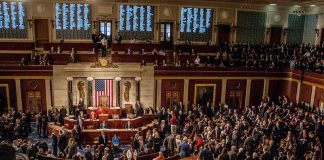
Senate Democrats emerged from a closed-door caucus meeting unified behind a set of demands aimed at reshaping how ICE and related immigration agents operate, then tied those demands to a must-pass Department of Homeland Security funding bill. A procedural vote is scheduled with a Friday midnight deadline to avert a partial shutdown. Republicans control Congress and the White House, but need six Democratic votes—giving the minority real, if narrow, leverage.
Democrats are concentrating their messaging on three visible requirements: banning masks, mandating body cameras, and requiring agents to display identification. Minority Leader Chuck Schumer framed the issue as stopping “anonymous” enforcement, insisting on “masks removed and body cameras activated.” The standoff also reflects a tactical decision: Democrats are signaling they may be willing to obstruct a broader package to isolate and rewrite DHS funding language, not just negotiate side agreements.
The Seven Demands: From Body Cameras to Limits on Enforcement Sweeps
The Democratic list goes beyond equipment rules and reaches operational constraints. Their demands include ending “roving patrols” described as warrantless sweeps, tightening warrant requirements by forcing coordination with state and local law enforcement, and applying a uniform code of conduct comparable to standards used by local police. They also want independent investigations into alleged abuses, alongside the mask prohibition, mandatory body cameras, and visible IDs.
Some details remain thin in public reporting, especially on what “ending roving patrols” would mean in practice and how new warrant rules would be written and enforced nationwide. That lack of specificity matters because statutory language can reshape on-the-ground discretion in ways that are hard to undo. Conservatives who favor clear borders and consistent enforcement will likely focus on whether reforms target misconduct narrowly—or instead make routine enforcement slower and more politically exposed.
Minneapolis Shootings Intensify the Political Pressure
The immediate catalyst is two fatal incidents in Minneapolis involving federal immigration agents. Reports cite a January 7 shooting death of Renee Good by a federal immigration officer and a January 24 shooting death of Alex Pretti involving Border Patrol agents—described as the second such killing in the city within a month. After the second incident, some Democrats called for Homeland Security Secretary Kristi Noem to resign, amplifying the standoff’s intensity.
Democrats cite these cases as proof that immigration enforcement is operating with insufficient transparency and oversight. Republicans and the White House, meanwhile, are warning about broader shutdown consequences—disaster relief delays, air travel disruptions, and national security impacts—while arguing the demands do not meaningfully affect ICE’s ability to operate during a shutdown. Another key operational detail reported is that ICE would continue functioning because it is funded through a separate tax-and-spending package passed in summer 2025.
Mask Ban vs. Agent Safety: The Core Dispute
The mask prohibition has become the symbolic center of the fight because it mixes accountability with personal security. Sen. Bernie Moreno argued that agents would rather not wear masks if they were not being “doxxed” or harassed and if threats against their families were not a concern. Democrats counter that law enforcement should not function as a faceless force and that identification and body cameras are standard expectations.
Sen. Angus King, an independent who caucuses with Democrats, bolstered the “unmask” argument by saying he knows of no U.S. law enforcement agency that wears masks and called for independent investigations when detainees or citizens are injured. The policy clash is straightforward: Democrats want statutory rules; Republicans prefer flexibility, including the idea of handling some changes through executive action rather than binding legislation—an approach Democrats say they do not trust.
Democrats lay out demands on ICE regulations ahead of possible government shutdown https://t.co/tzgD1k99Ue
— USA TODAY Politics (@usatodayDC) January 29, 2026
The bill’s reported $20 million allocation for body cameras and de-escalation training complicates the narrative. If funding exists but a mandate does not, the fight becomes about control and permanence: Democrats want requirements written into law, while Republicans can point to resources already included and question whether a shutdown threat is justified. With the deadline approaching, the key unknown is whether Democrats hold firm or repeat past episodes where shutdown threats ended in retreat.
Sources:
Senate Democrats’ ICE demands: “Masks off, body cameras on” — Axios
Government shutdown: Democrat demands for ICE — TIME
Democrats: Government shutdown over ICE policies — MPR News